
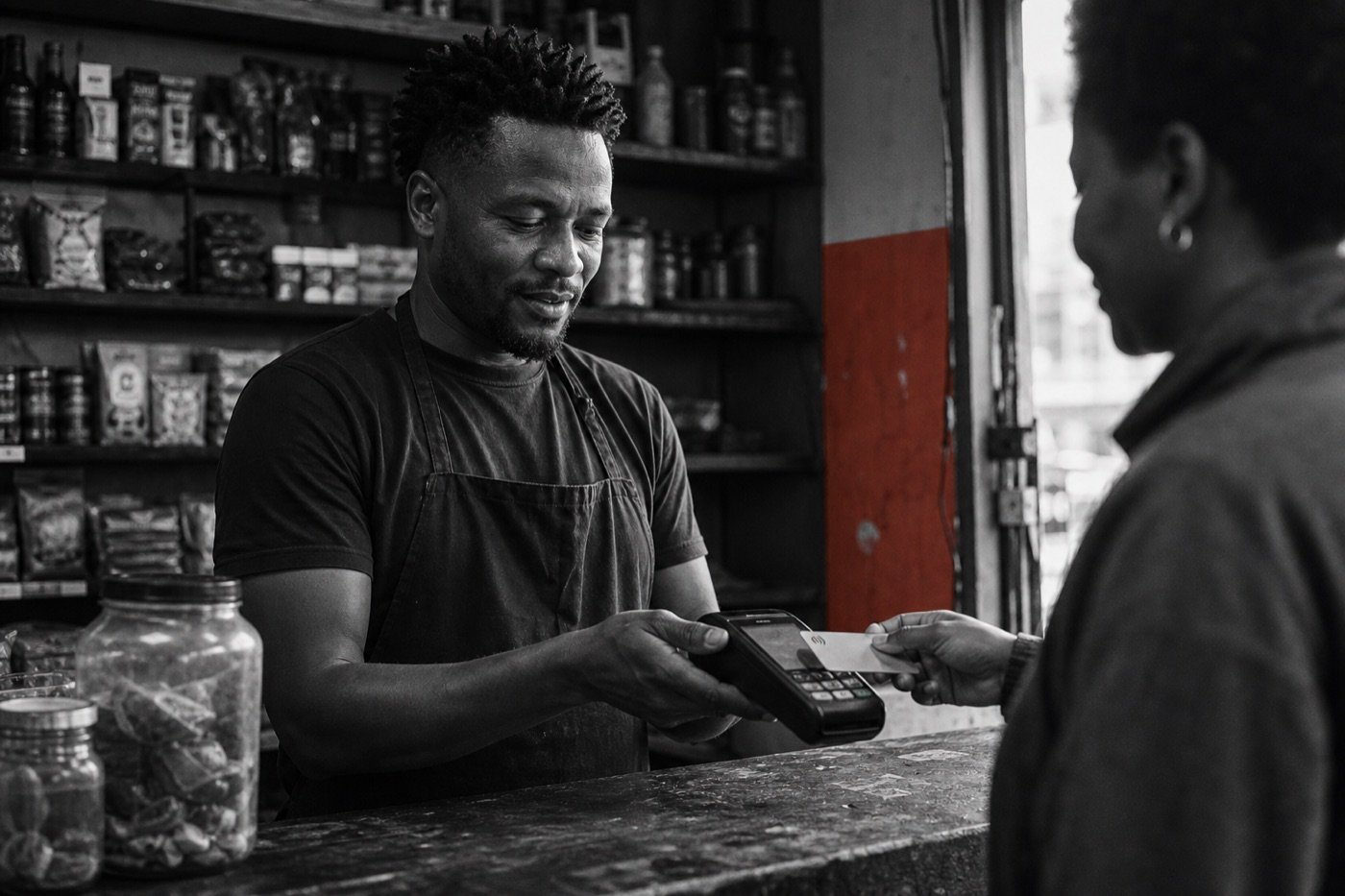
In 2012, Katlego Maphai was having lunch at a hole-in-the-wall eatery in San Francisco, the kind of place he assumed would never take a card. Then a mobile reader appeared on the counter and the payment went through without fuss. Nobody around him thought it was remarkable. To Maphai, it was the whole problem, sitting in plain sight.
Back home, that same transaction was close to impossible for most of the businesses that needed it. South Africa had a card penetration of around 75 percent, tens of millions of people walking around with bank cards in their pockets. What it did not have was a way for the small trader, the salon, the weekend market stall or the three-month-old café to accept those cards. Only around 6 to 7 percent of small merchants could.
That gap is where the company started. Not with a device. With a question about who the existing system was built for, and who it quietly left out.
It is worth being honest about what this story is and is not. Yoco did not invent anything. Card payments already worked. The machines already existed. What the four founders did was less glamorous and far more useful. They looked at a customer everybody else had decided was not worth the effort, and they rebuilt the effort.
The opportunity was hiding inside the rejection
The founding insight was not that small businesses in South Africa wanted card machines. Plenty of people could have told you that.
The insight was sharper. A large group of businesses had been priced and processed out of accepting cards, not because they were bad customers, but because the institutions serving them had built their model around someone else.
The banks were not being stupid. They were being rational. Signing up a merchant meant paperwork, risk checks, hardware, installation, support and an account to manage. When all of that cost is designed around a large retailer with predictable turnover, the small operator becomes a rounding error. Too small. Too informal. Too much hassle for too little return.
Maphai pulled in three friends to attack the problem. Carl Wazen, who had worked alongside him at the telecoms advisory Delta Partners and at Rocket Internet. Bradley Wattrus, an actuary. Lungisa Matshoba, a developer who had been building apps long before smartphones were ordinary. Consulting, finance and deep technical skill around one table, which mattered, because the table was about all they had.
They turned the question around. Instead of asking whether a small merchant was worth the existing process, they asked what the process would have to become for that merchant to be worth it.
Yoco’s important move was not the device. It was redesigning the cost of saying yes.
That is a very different problem to solve, and it does not get solved with cheaper hardware alone. Onboarding had to get faster. Pricing had to be something a person could understand in one sentence. The monthly fees and the lock-in contracts had to go. And distribution could not depend on a bank relationship manager deciding, account by account, that the opportunity was worth his afternoon.
None of that happened quickly. By Maphai’s own account, the wait ran to about a year to secure a licence, a year to build the product and get it certified, and a year of running a beta before the public launch in 2015. Three years of groundwork before most people had heard the name. The merchant had to be able to start small without being punished for starting small, and getting to that point was slow, unglamorous and mostly invisible.
The card reader was only the visible part
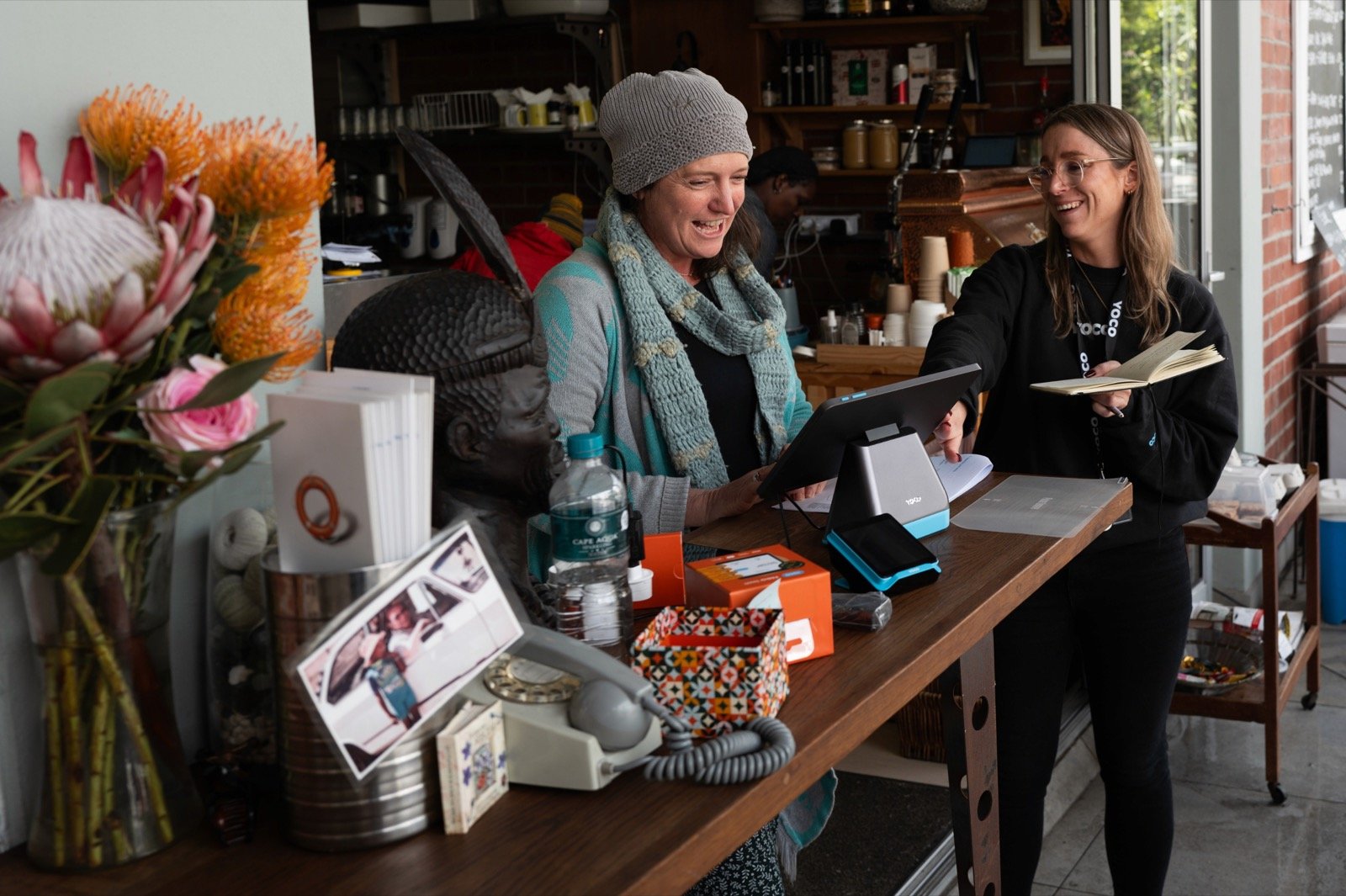
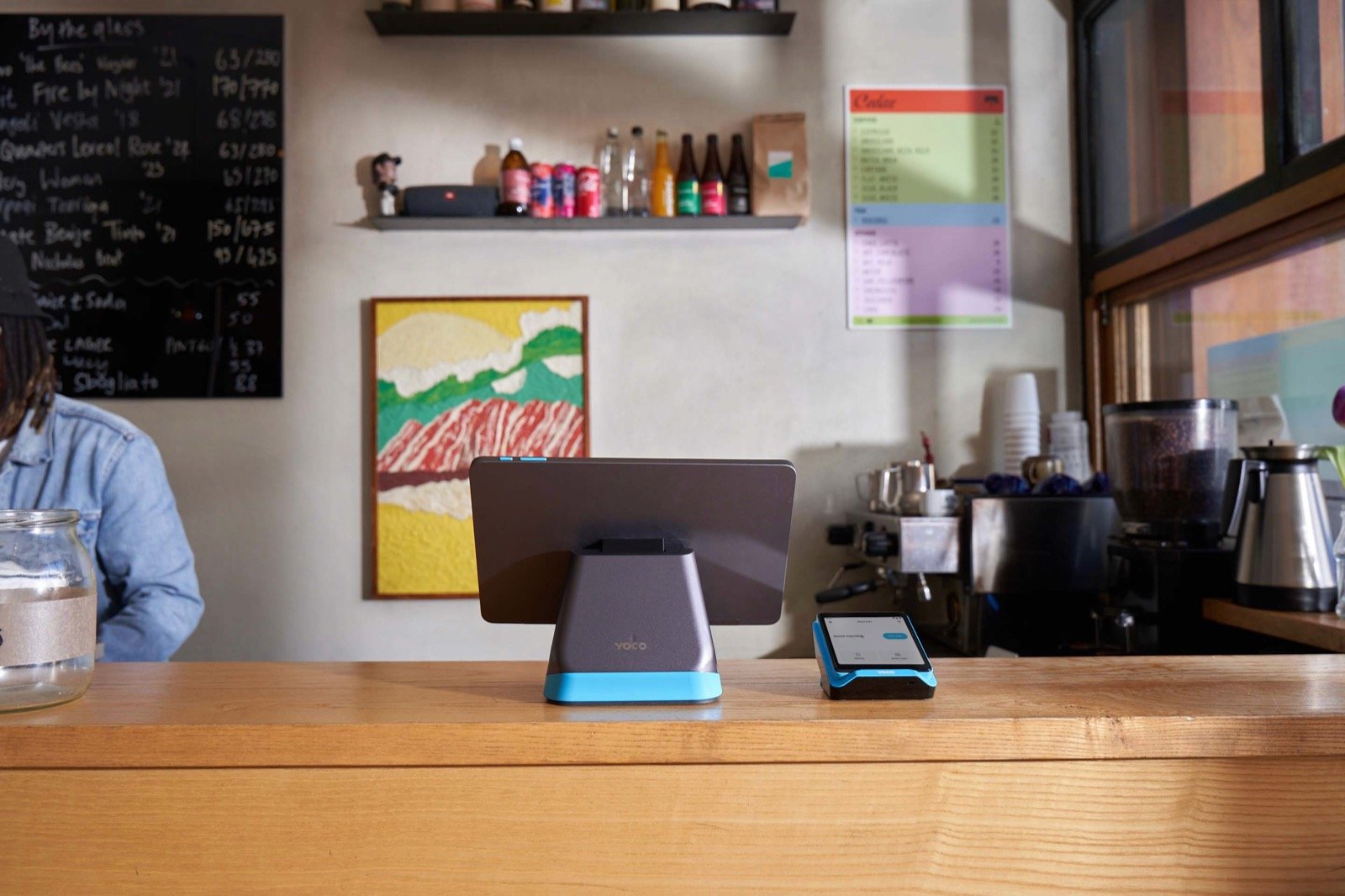
The pitch, when it finally arrived, was easy to understand, which was the point. A compact card reader, paired with software, that let a small business start accepting cards without the traditional complexity.
But simple on the outside almost always means complicated on the inside.
Payments are infrastructure. Money has to move correctly. Settlement has to land when it was promised. Fraud has to be managed quietly in the background. Support has to actually work at the exact moment a transaction fails in front of a paying customer. A business owner might forgive a clumsy reporting screen. They will never forgive money that does not arrive.
So trust was not a marketing layer for Yoco. It was an operating requirement.
This is the part that disappears when the story gets shrunk down to “they made a clever little blue card machine.” The hardware made the offer real and tangible. The harder work, the work that actually decided whether the company lived or died, was building the settlement, the support, the distribution and the credibility that let a business owner hand over a full day of takings and not lie awake about it.
Removing institutional friction is the easy sentence to write. Removing it without making the product feel institutionally weak is the difficult thing to do.
Distribution was part of the product
Big financial institutions reach customers through branches, relationship managers and an existing book of business. Those channels work beautifully when the target customer already fits the institution.
Yoco’s market did not fit anybody.
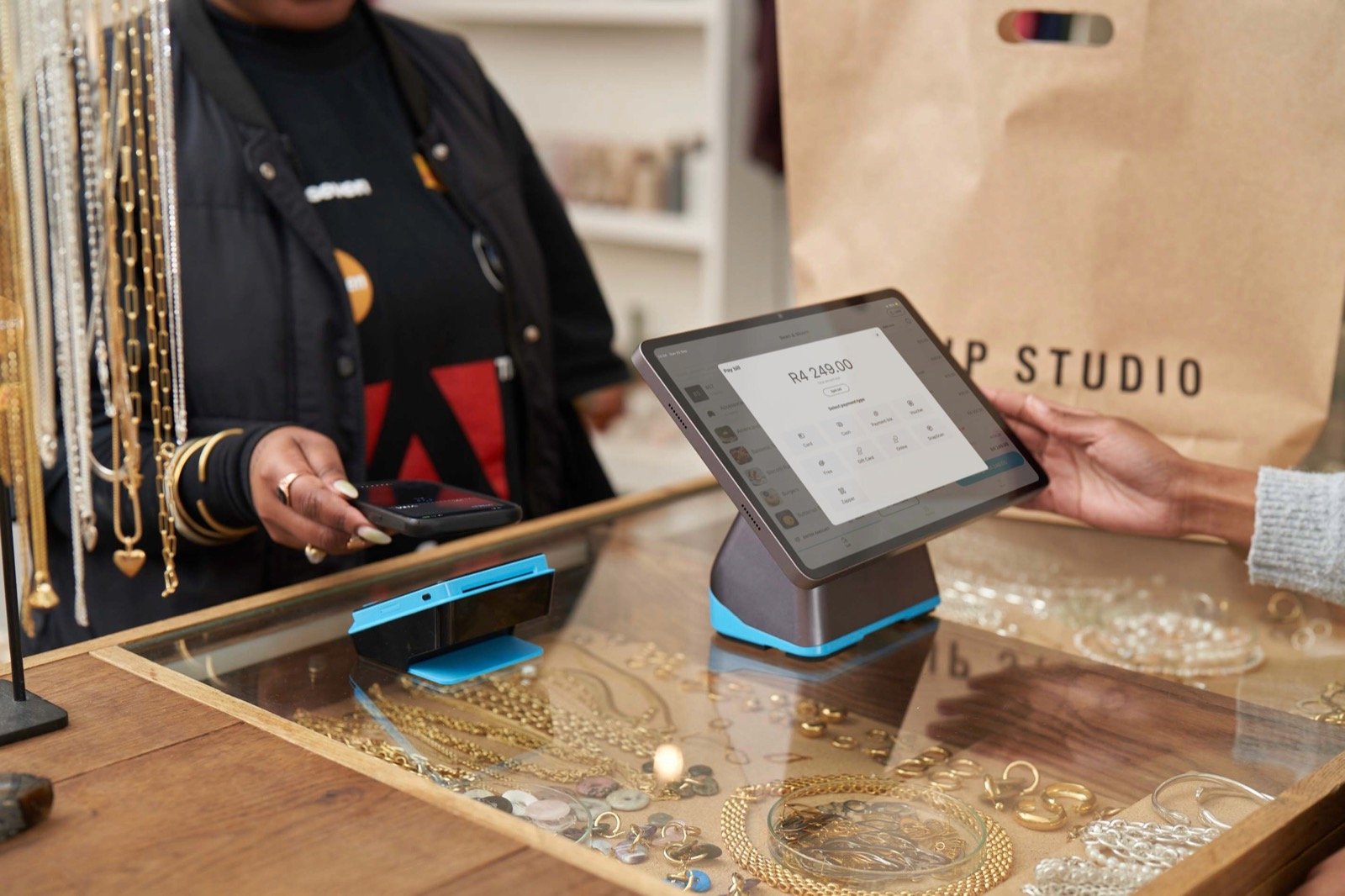
Independent businesses are fragmented by their nature. They sit across different industries, different neighbourhoods, different levels of formality and different stages of survival. There is no single procurement department to win over. There is no one contract that quietly unlocks ten thousand locations.
Every merchant has to be found, understood, onboarded and supported. One at a time.
From a distance, that looks painfully inefficient, and in the early days it was. But here is the thing that incumbents underestimate. Once that messy process actually works, it becomes very hard to copy. The company that learns how to serve fragmented, awkward, small customers over and over builds up distribution and operational knowledge that a larger competitor cannot reproduce just by dropping its price.
By the time it raised its Series B in 2018, Yoco served more than 27,000 small businesses and was adding over 1,500 every month. Three quarters of them had never accepted a card before. The “uneconomic” customer turned out to be a real market. It just needed a business built around it rather than bolted onto the side of one designed for someone else.
COVID exposed what the first product could not do
The card reader was built for one thing. A person, standing in front of you, paying in person.
Then COVID-19 made standing in front of you illegal.
That moment exposed a real risk sitting inside the model. A pure point-of-sale hardware company rises and falls with foot traffic, and in 2020 foot traffic disappeared overnight. Yoco’s customers suddenly needed to get paid when the counter was shut, the table was empty and the market was cancelled.
So the company accelerated the online and remote payment products it had been building, rolling them out just as the first hard lockdown hit. This was not only a defensive scramble, although it was partly that. It clarified the bigger picture. Small businesses did not actually want a card machine. They wanted a practical way to get paid that followed how they really sold. In person, online, by link, by invoice, wherever the money happened to be.
Payments stayed the entry point, and for a good reason. A payment is an unusually honest signal. It shows that a business is alive, how it trades and exactly where the friction sits. Earn the right to sit inside that transaction and you have a foundation to offer genuinely useful tools on top of it.
This is the moment Yoco stopped being a device company and started becoming a platform.
The capital followed the proof, not the other way round
In July 2021, Yoco announced an $83 million Series C led by Dragoneer Investment Group, the firm behind the likes of Klarna, Nubank and Square. At the time it was the largest single funding round ever raised by a South African payments company. The round brought Yoco’s total funding to date to $107 million.
Read the headlines and it looks like a sudden fintech success story. The order of events tells a more useful truth.
The money did not create the business. The business earned the money. Yoco first spent years proving that it could win and keep a customer the traditional providers had struggled to serve at a profit. By the Series C it served more than 150,000 small businesses, processing roughly R15 billion in card payments a year. The capital arrived after the operating model had already shown that fragmentation was survivable, and then repeatable.
Those same numbers point straight at the next problem, though. A large merchant base is an opportunity and a set of expectations at the same time. Customers who arrive for payments eventually want software, online selling, reporting and access to capital. Competitors can copy your pricing and your hardware within a quarter. The harder thing to copy, and the only real defence, is becoming more useful without becoming more complicated.
By 2026, Yoco served more than 200,000 small businesses, processing over $1 billion in card payments a year, with around 30 million card taps annually and an estimated valuation near $700 million.
The founder handover is part of the story, not the end of it
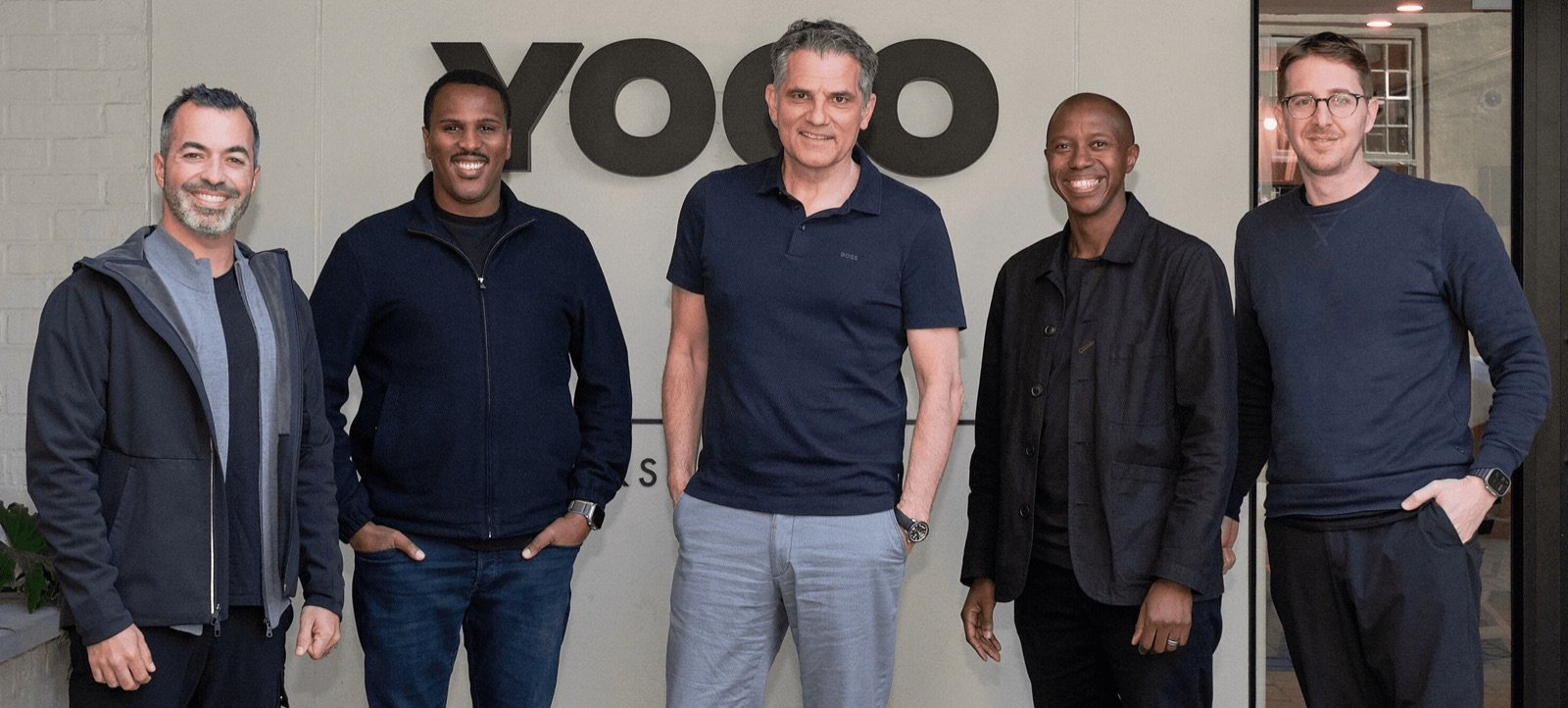
In September 2025, Katlego Maphai stepped down as chief executive after roughly a decade in the role. His co-founders Lungisa Matshoba and Bradley Wattrus ran the company as interim co-CEOs while the board searched, globally, for a permanent replacement. In May 2026 that search ended with the appointment of Carsten Höltkemeyer, a German banking and payments executive, effective 1 June 2026. It was the first time in the company’s history that someone other than a founder had led it.
Founder transitions tend to get framed as either an ending or a correction. This one is better read as a test of what the company actually built.
Maphai’s own explanation was blunt enough. The skills that launch a company are not always the skills that scale it. He pointed to a market that had changed underneath them, with Capitec and others now building their own competing card-payment products, and argued that fresh experience was needed for the next phase. He described the decision as one made by all four founders together.
That candour is the interesting part. Yoco no longer has to argue that small merchants deserve access to card payments. That argument is over, and it won. The job now is to turn all of that distribution, all of those merchant relationships and all of that payments infrastructure into a durable commerce platform, while pushing into markets beyond the one where it first learned the problem.
And the risk is an old and familiar one. Companies that win by stripping out complexity have a habit of slowly building it back in. One new product, one new layer, one new market, one new tier of management at a time. The next version of Yoco has to hold on to the clarity of the original promise while running at a scale the four founders could not have designed for around that first table.
Where I land on this
Here is what makes Yoco worth studying, and it is not the inclusion angle, even though that is the version you will see repeated everywhere.
The real lesson is about market design, and it is a slightly uncomfortable one.
An underserved customer is not automatically a good business. Sometimes the incumbent is ignoring a group of people because the economics genuinely are bad, and no amount of mission statement fixes that. The opportunity only appears when a founder can tell the difference between costs that are truly built into serving a customer, and costs that exist purely because the incumbent’s model was shaped for somebody else.
Yoco found a customer who looked uneconomic inside a bank’s process, and then built a different process.
It lowered the cost of acquisition, onboarding and support. It made the offer legible. It let merchants begin without taking on fixed costs they could not justify. And then it used that first transaction relationship as the ground to stand on for everything that came after.
I see the same trap on a smaller scale in my own work all the time. We look at a “difficult” client segment, or a service that feels like too much admin for too little money, and we write it off using the incumbent’s maths without ever asking whether the maths is actually ours. Yoco’s whole story is an argument for asking that question before you walk away from a market.
The card reader mattered. It made the thing real. But the more important achievement, the one worth taking into your own business, was deciding that the customer behind it was worth serving, and then doing the unglamorous work to make that true.
That is the part nobody puts on the funding announcement.
Sources
- Daily Maverick, “Katlego Maphai, CEO of Yoco Technologies, revolutionised the payment landscape” (28 December 2022). Founding scene in San Francisco, and the founders’ Delta Partners and Rocket Internet background. https://www.dailymaverick.co.za/article/2022-12-28-katlego-maphai-ceo-of-yoco-technologies-revolutionised-the-payment-landscape/
- News24, “How a one-table office created the most recognisable blue machine in SA” (March 2026). The bachelor studio and single-table origin. https://www.news24.com/southafrica/good-news/how-a-one-table-office-created-the-most-recognisable-blue-machine-in-sa-20260315-1159
- How We Made It In Africa, “The journey so far: Katlego Maphai, co-founder and CEO, Yoco” (24 October 2018). Maphai on the licence, build, certification and beta timeline. https://www.howwemadeitinafrica.com/the-journey-so-far-katlego-maphai-co-founder-and-ceo-yoco/62246/
- Partech, “Yoco Secures Series B Raise of $16M, Led by Partech” (5 September 2018). Series B figure, 27,000 merchants, 1,500 a month, 75 percent first-time card acceptors, and the 7 percent merchant statistic. https://partechpartners.com/news/yoco-secures-series-b-raise-16m-led-partech
- Ventureburn, “SA payments platform Yoco raises $83m in funding” (27 July 2021). Series C, 150,000 businesses, $107 million total raised. https://ventureburn.com/2021/07/sa-payments-platform-yoco-raises-83m-in-funding/
- Partech, “South Africa’s Yoco raises US$83m to scale its financial ecosystem for small businesses” (27 July 2021). Largest South African payments raise, ecosystem detail. https://partechpartners.com/news/south-africas-yoco-raises-us83m-to-scale-its-financial-ecosystem-for-small-businesses
- TechCentral, “Yoco brings in external CEO from European fintech sector” (6 May 2026). Höltkemeyer appointment, nine-month interim co-CEO period, subsequent role changes. https://techcentral.co.za/yoco-brings-in-external-ceo-from-european-fintech-sector/281069/
- Yoco Blog, “Yoco’s Next Chapter: Built for What Your Business is Becoming” (6 May 2026). 200,000-plus merchants, 30 million card taps a year. https://www.yoco.com/za/blog/ceo-announcement/
- Disrupt Africa, “SA fintech leader Yoco appoints German Carsten Höltkemeyer as new CEO” (8 May 2026). 200,000 merchants and over $1 billion in card payments a year. https://disruptafrica.com/2026/05/08/sa-fintech-leader-yoco-appoints-german-carsten-holtkemeyer-as-new-ceo/
- Billionaires.africa, “Katlego Maphai exits Yoco…” (3 June 2026). Approximate $700 million valuation, $107 million total funding, Maphai’s Jumia background. https://www.billionaires.africa/2026/06/03/katlego-maphai-exits-yoco-after-a-decade-as-south-african-fintech-appoints-european-banker-as-its-first-outside-ceo/